

Set Up a Business Entity
Define your company details, invoice address, tax address, and billing contact — required before you can generate invoices or collect payments.
You need the "Owner" role before you can set up a business entity.
You can set up your business entity from any profile or team — you don't need to switch to a specific one first.
A business entity represents the legal identity of your business on invoices. It stores your company name, address, tax details, and invoicing preferences. Follow the steps below to create one.
Where to find your business entity#
- Click Settings in the bottom-left of the sidebar, or click your profile picture and select Settings.
- Scroll down to the Billing section and click on Business Entity to open the business entity page.
Setting up your business entity#
Overview#
Setting up your business entity in MyPetParlor App involves defining three essential components: company details, invoice display address, and tax address. Additionally, you have the option to enter Tax ID Numbers (TINs) or TIN/VAT information based on your organisation's needs.
- Company details: This is the foundational information about your company. It includes the legal name of the business, location, contact information, and other relevant details.
- Invoice display address: This is the address that will appear on invoices that are generated by MyPetParlor App. It should be the official business address where your company is registered.
- Tax address: This is the address used by MyPetParlor App to calculate tax obligations. It’s essential to enter this information accurately, as it affects the calculation of sales and other taxes for your transactions.
- Tax ID numbers (TINs) / TIN/VAT information (optional): If your company is required to collect VAT or has a Tax Identification Number (TIN), you can enter this information here. This section is optional, and you should consult with your tax advisor or authority to determine if it is necessary for your business.
- Billing Contact Email: This is the email address used for display on all MyPetParlor App invoices/receipts and acts as the 'reply-to' address for all transaction-related customer communications.
1. Enable Invoicing#
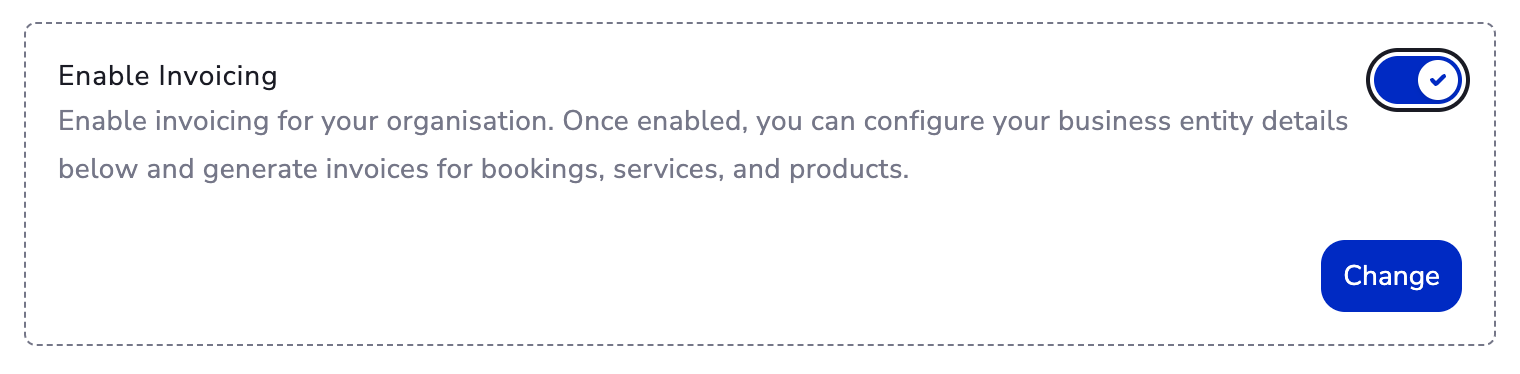
If you have not already, make sure to enable invoicing for your organisation.
Once changed, invoicing will be enabled and you can start creating or updating your business entity.
2. Entity Information#
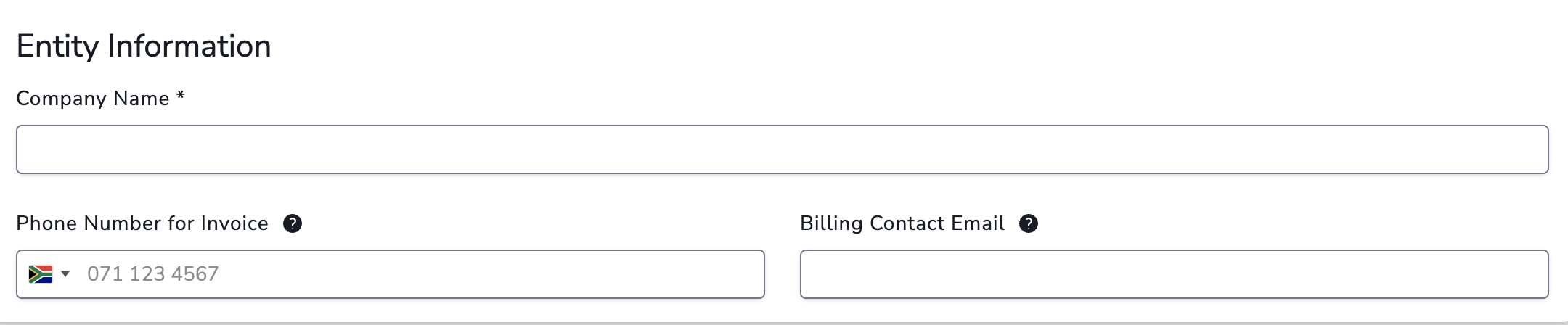
Fill in the basic details about your business:
- Company Name — The registered name of your business.
- Phone Number for Invoice — The phone number that will appear on your invoices (often a customer support number).
- Billing Contact Email — The email address displayed on all invoices and used as the reply-to address for transaction-related communication.
3. Entity Address#
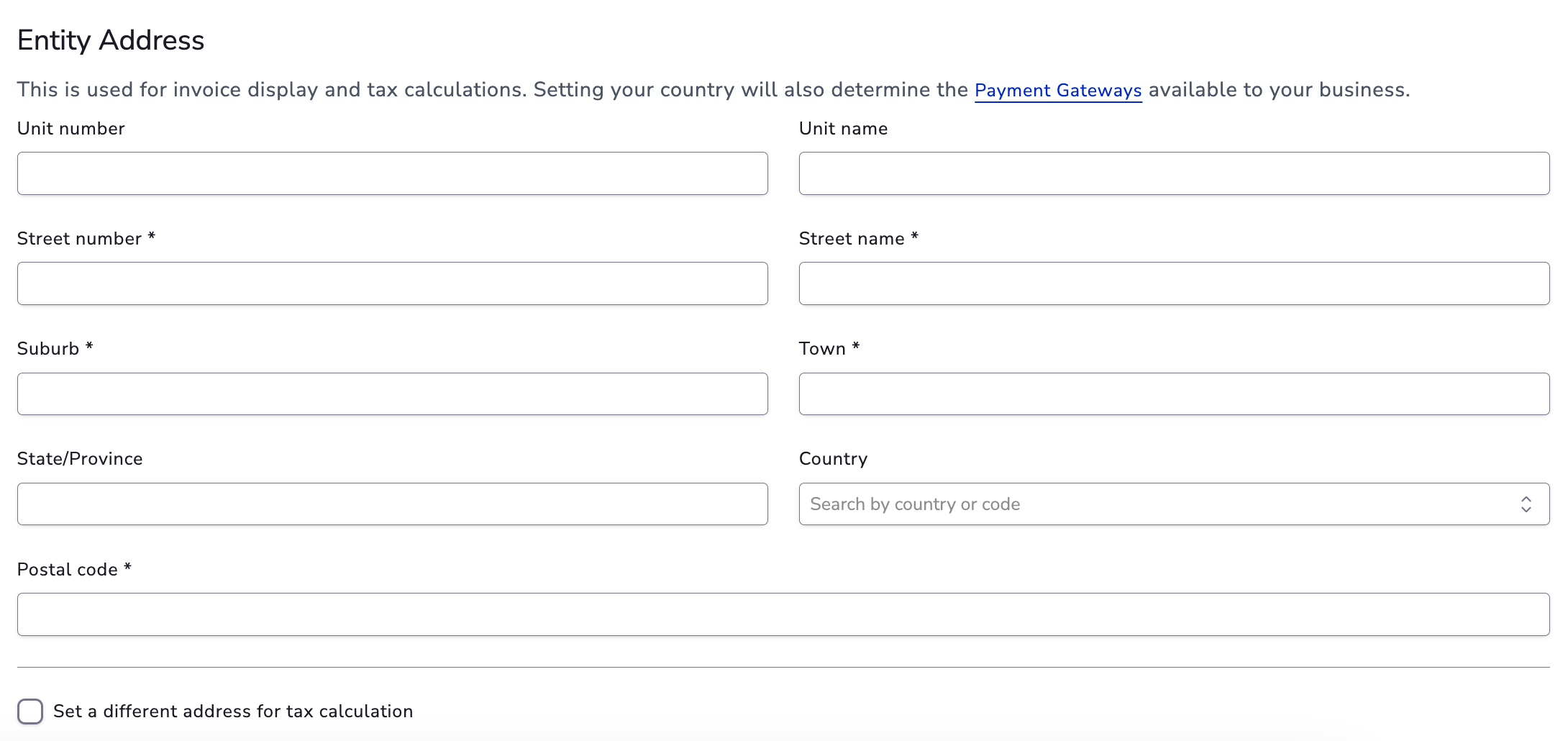
Enter your business address. This address is used for invoice display and tax calculations. The country you select will also determine which payment gateways are available to your business.
You can optionally provide a different tax address if your tax registration address differs from your business address.
4. Tax ID for Invoice Display#

Provide the tax identifiers that will appear on your invoices:
- VAT Number — Your VAT registration number.
- Registration Number — Your company registration number.
5. Invoicing Mode#
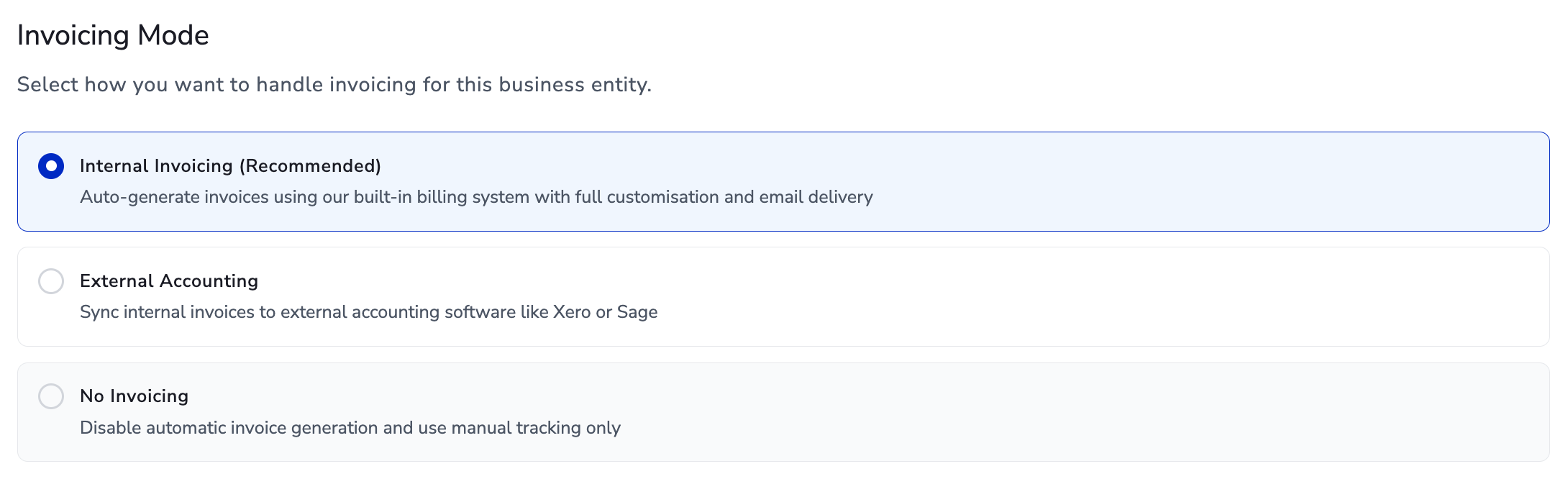
Select how you want to handle invoicing for this business entity:
- Internal Invoicing (Recommended) — Auto-generate invoices using the built-in billing system with full customisation and email delivery.
- External Accounting — Sync internal invoices to external accounting software like Xero or Sage (Coming Soon).
- No Invoicing — Disable automatic invoice generation and use manual tracking only.
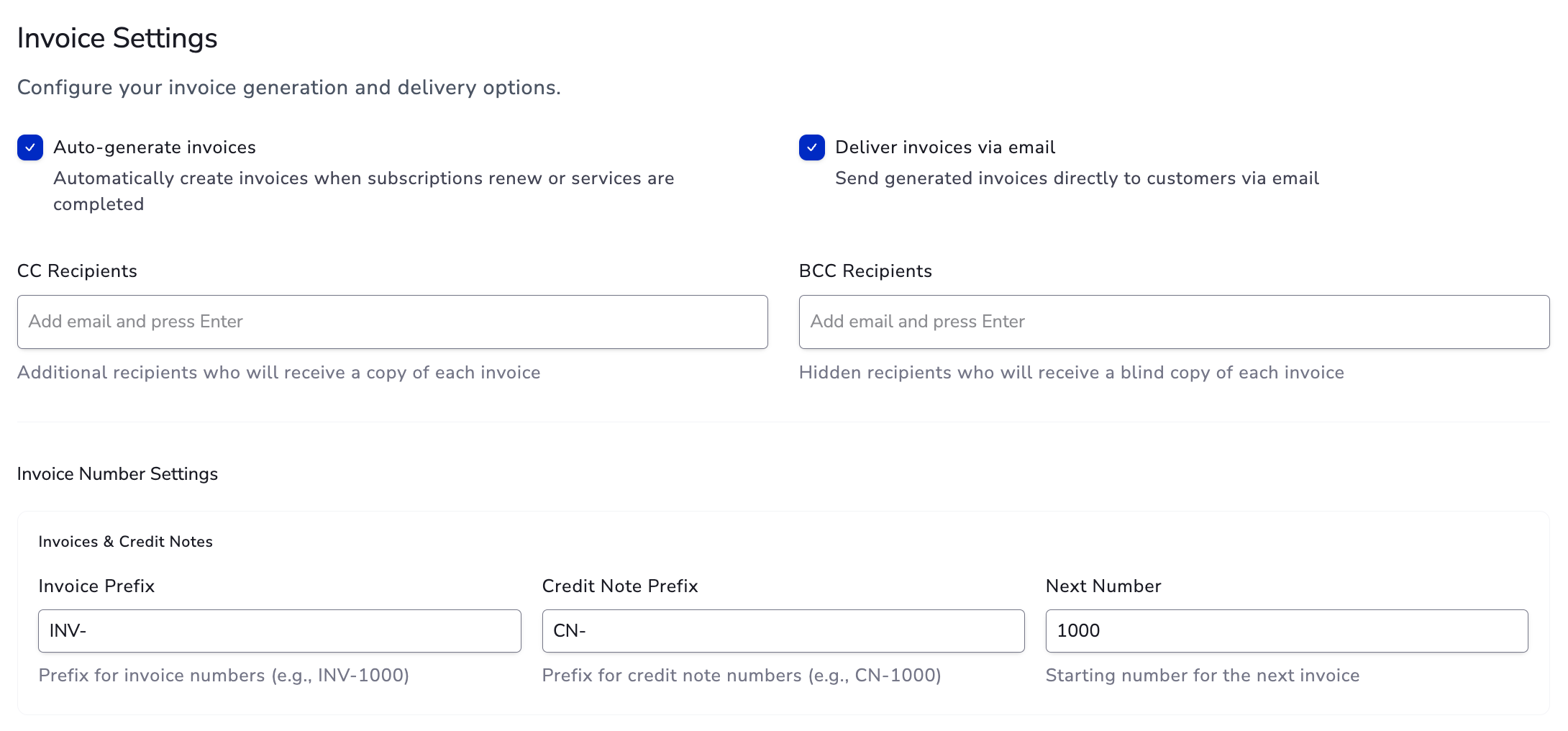
If you select Internal Invoicing or External Accounting, an additional Invoice Settings section will appear where you can configure automatic invoice generation, email delivery, CC/BCC recipients, and invoice number prefixes.
6. Subscriber Location Countries#

Select the countries for which this business entity will be used. You can search for countries by name or code, add them individually, or click Add all to select every available country.
Save Your Business Entity#
Once you have filled in all the required details, click the button at the bottom of the form to save your business entity configuration.